If you are starting the homebuying process, you have likely heard the terms "pre-qualification" and "pre-approval" used interchangeably. While they sound similar, they are very different processes and carry different weight with real estate agents and home sellers. Understanding the distinction is crucial to making a competitive offer.
A pre-qualification is a quick, informal estimate of how much you might be able to borrow. It usually takes just a few minutes online or over the phone and requires no documentation. You simply tell the lender your income, assets, and debts, and they give you a ballpark figure based on that self-reported information.
Because the lender has not verified any of your information, a pre-qualification is not a guarantee of financing. It is a useful first step to establish a rough budget and see if you are in the right ballpark, but it carries very little weight with sellers.
A pre-approval is a much more rigorous process. You will need to submit a full mortgage application, providing documentation such as pay stubs, W-2s, tax returns, and bank statements. The lender will pull your credit score, verify your employment, and review your assets.
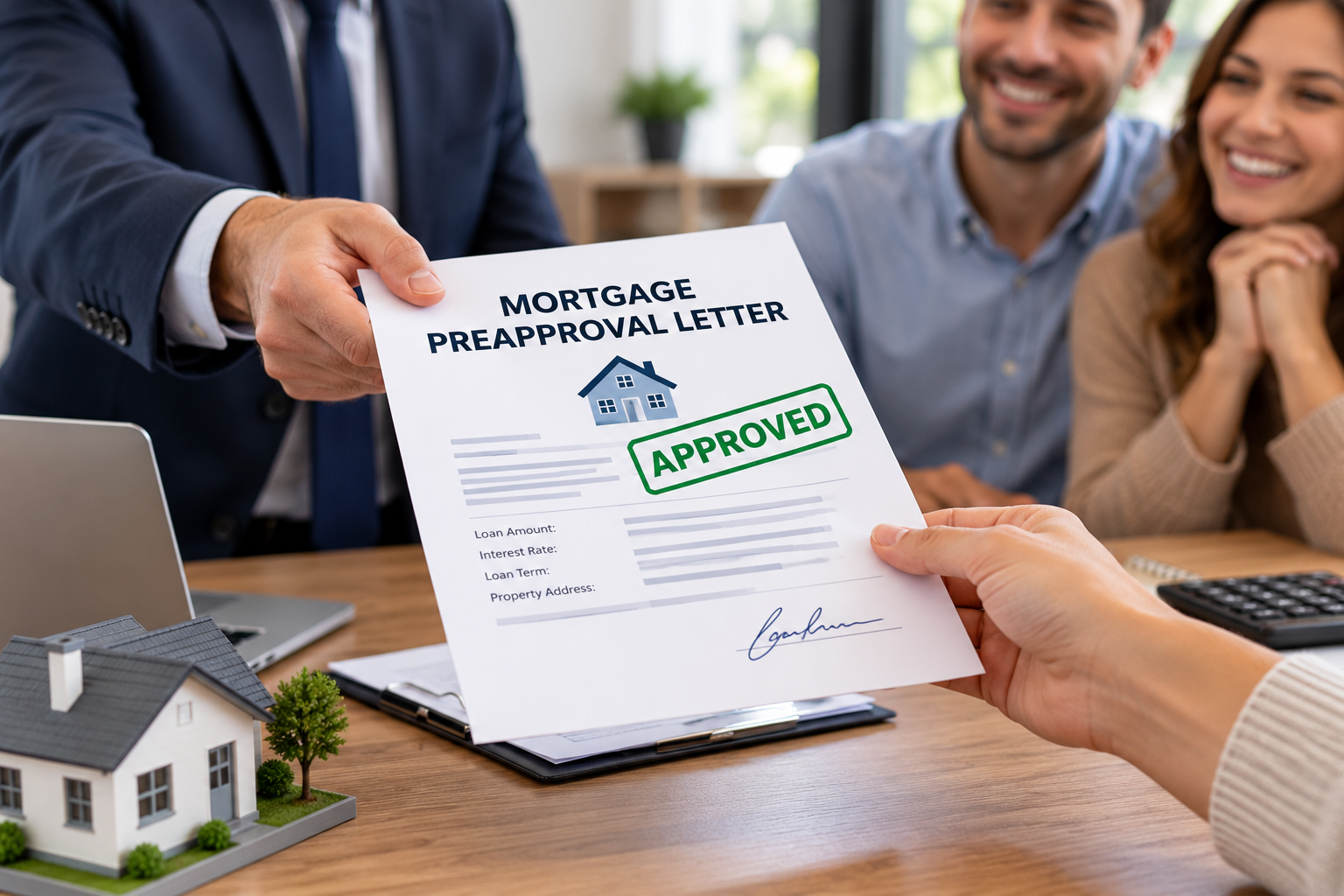
If you are approved, the lender issues a conditional commitment letter stating that they are willing to lend you a specific amount, subject to finding a suitable property and a final appraisal. A pre-approval is a strong indicator of your financial credibility and shows sellers that you are a serious, qualified buyer.
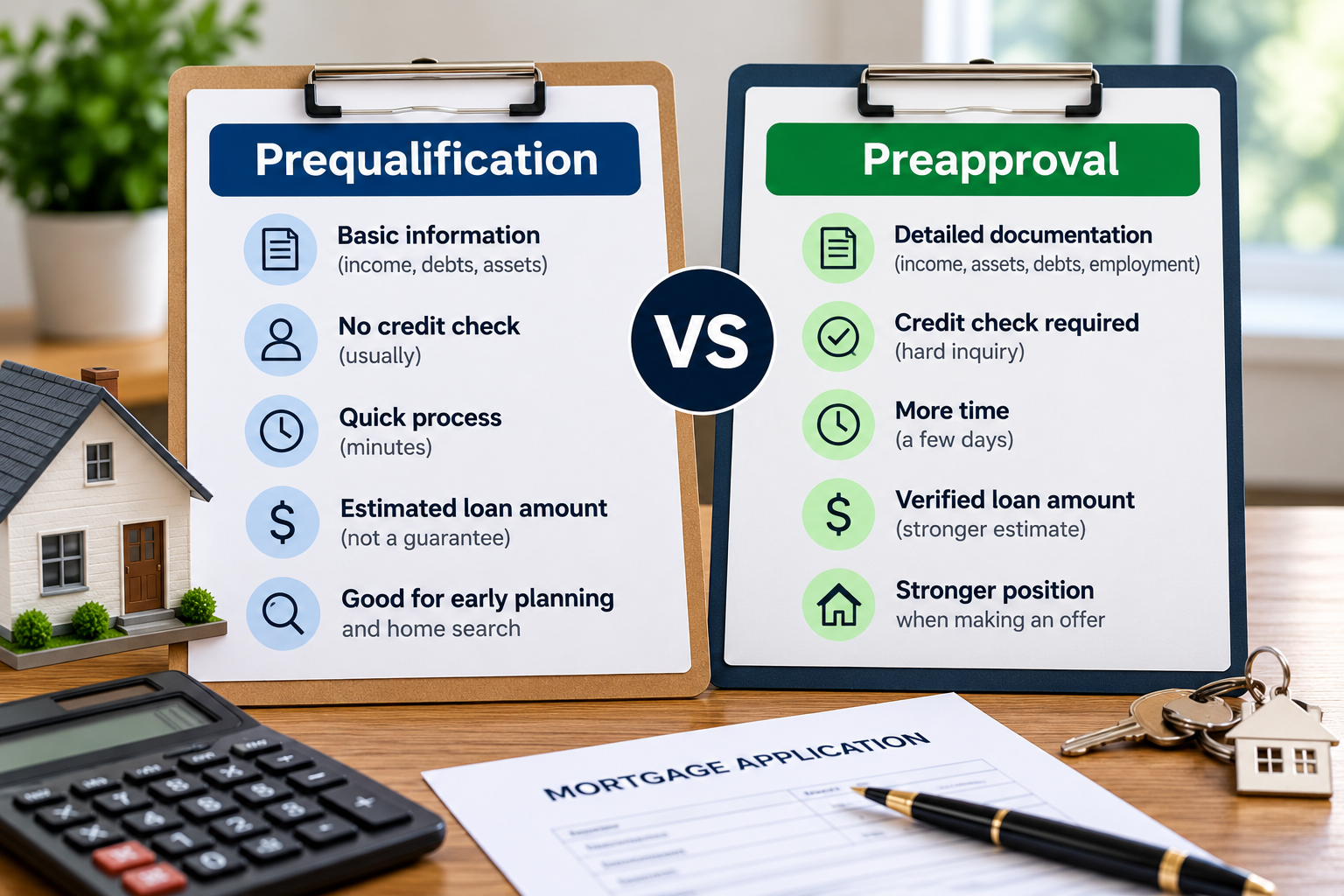
In a competitive real estate market, a pre-approval letter is often mandatory to submit an offer. Sellers want to know that the deal will not fall apart during the underwriting process because the buyer could not actually get financing. A pre-approval letter provides that assurance. It essentially tells the seller: "A lender has verified my finances and is ready to fund this loan."
If you submit an offer with only a pre-qualification, you may be seen as a riskier buyer. A seller with multiple offers will almost always choose the buyer with a verified pre-approval.
A pre-approval is typically valid for 60 to 90 days. If your house hunt takes longer than that, you will need to update your documentation and get re-approved.
You also need to be careful during this period: do not open new credit cards, finance a car, or change jobs, as these actions can invalidate your pre-approval and jeopardize your mortgage. Lenders often pull your credit again right before closing to ensure your financial situation hasn't changed.
You can get a pre-qualification early in your research phase to establish a budget. But before you start touring homes or making offers, you must get a formal pre-approval from a reputable lender. Use our mortgage calculator to get an idea of what your monthly payment will be once you know your pre-approved amount.