When applying for a mortgage, lenders use several factors to determine your interest rate, but none is more important than your credit score. A difference of just a few points can mean tens of thousands of dollars in extra interest over the life of a 30-year loan. Understanding how your FICO score works and how it impacts your mortgage is the first step toward securing the best possible rate.
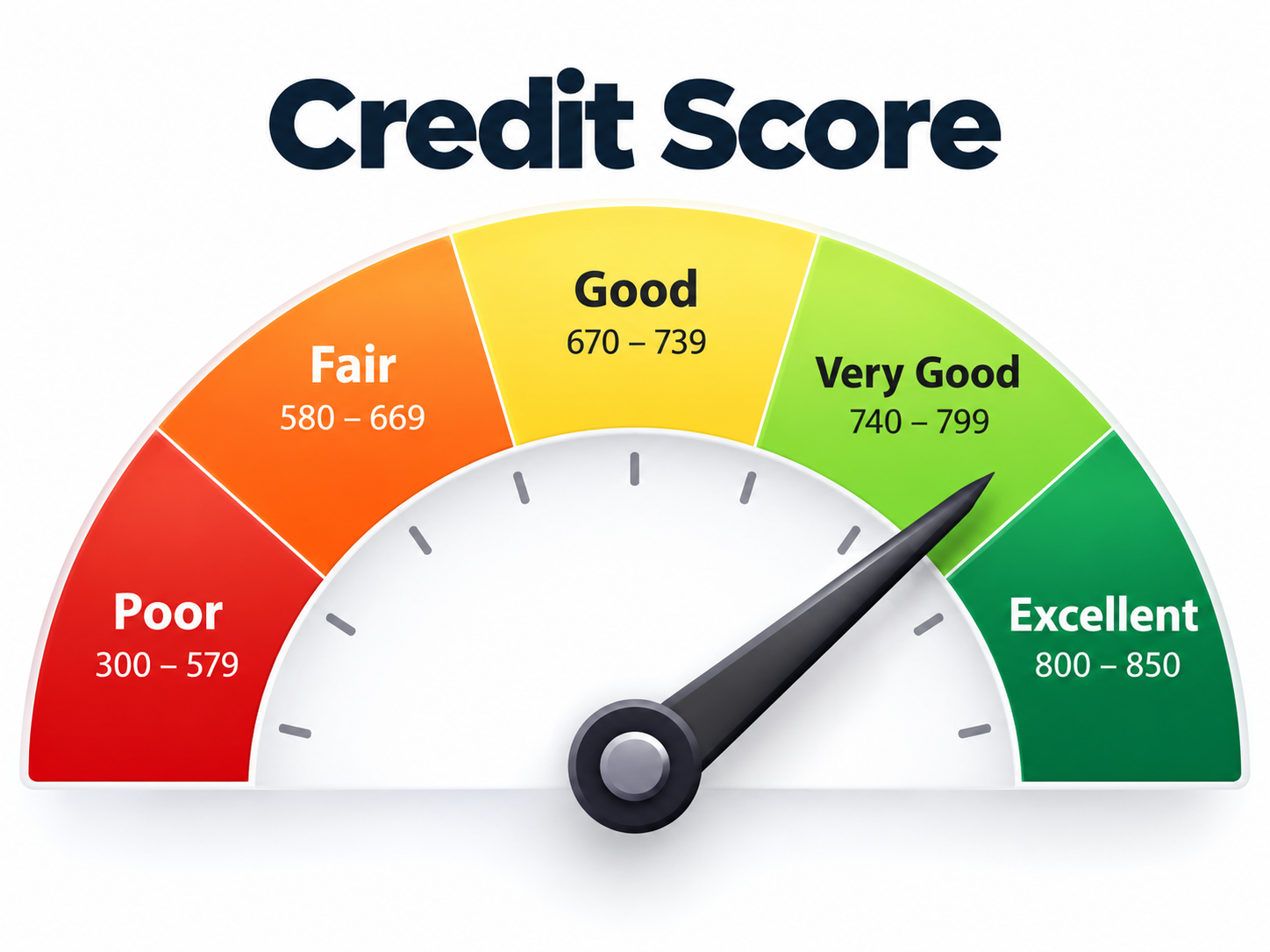
Lenders price risk into their interest rates. Borrowers with lower credit scores are statistically more likely to default on their loans, so lenders charge them higher interest rates to offset that risk. Conversely, borrowers with excellent credit are rewarded with the lowest available rates.
Let's look at a real-world example on a $350,000 30-year fixed-rate mortgage:
The difference between a 760 score and a 620 score is $349 per month. Over 30 years, that is an extra $125,640 paid purely because of a lower credit score.
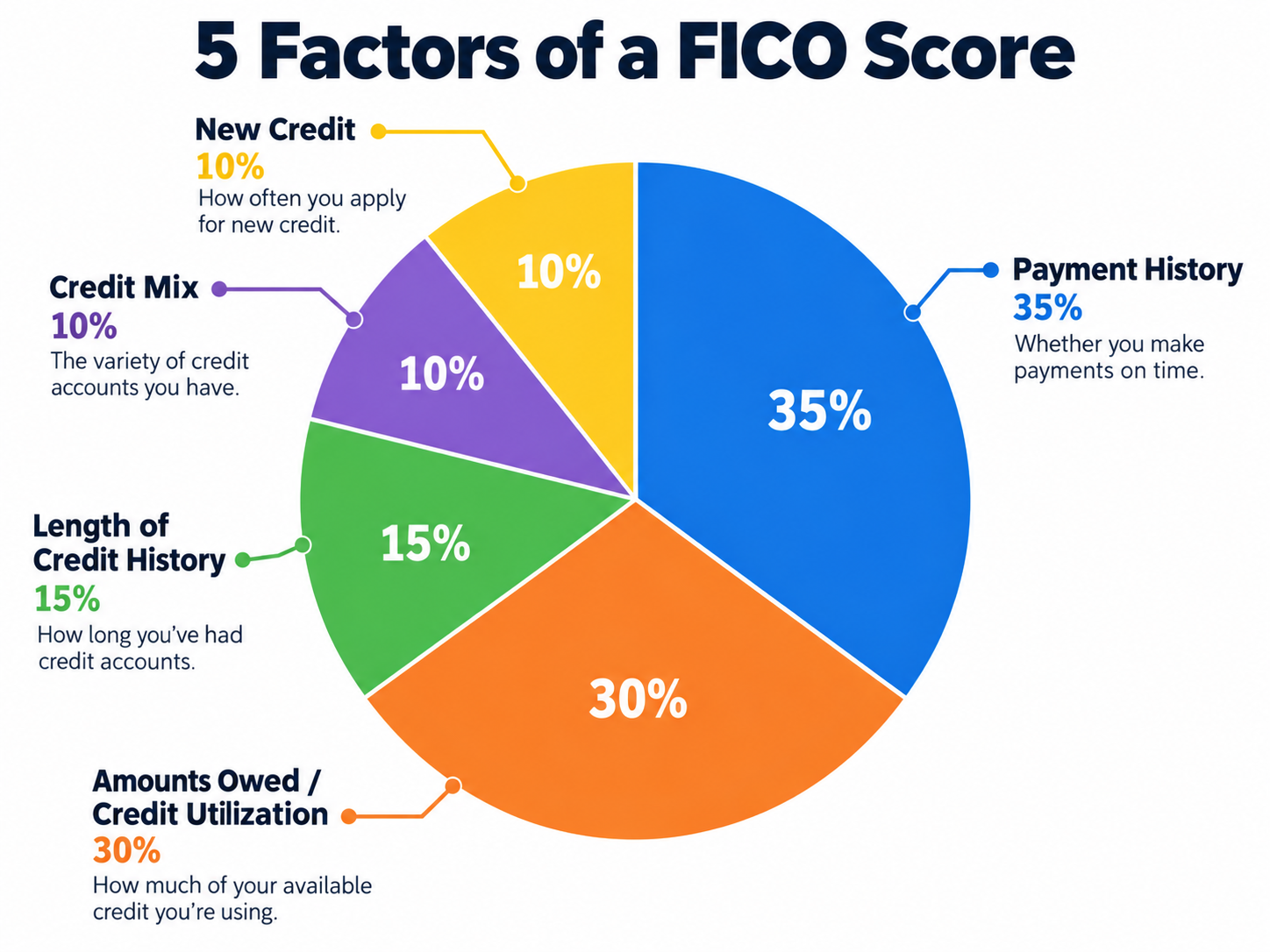
To improve your score, you need to understand what goes into it. The FICO score is the most widely used credit scoring model in the US, and it is broken down into five categories:
This is the most important factor. Lenders want to know if you pay your bills on time. A single late payment can drop your score by 50 to 100 points. If you have missed payments in the past, the impact lessens over time, but it stays on your report for up to seven years.
This is the second most important factor. It measures how much of your available credit you are using. If you have a $10,000 credit limit and a $5,000 balance, your utilization is 50%. Experts recommend keeping your utilization below 30%, and ideally below 10%. Paying down a maxed-out credit card is the fastest way to boost your score.
This measures how long you have been using credit. A longer history is better. This is why you should never close your oldest credit card accounts, even if you don't use them. Closing an old account shortens your average credit history and reduces your total available credit, which can hurt your score.
This looks at the variety of credit accounts you have, such as credit cards, auto loans, student loans, and mortgages. Having a mix of installment loans (like a car payment) and revolving credit (like a credit card) shows that you can manage different types of debt.
Every time you apply for a new credit card or loan, a "hard inquiry" is placed on your report. Too many hard inquiries in a short period can make you look desperate for credit. When shopping for a mortgage, get quotes from multiple lenders within a 14-day window. The credit bureaus understand this is a single shopping event and will only count it as one inquiry.
If your score is not where you want it to be, do not panic. You can often raise your score significantly in 3 to 6 months with a few strategic moves:

The minimum score required depends on the type of loan:
When you are ready to apply, get quotes from multiple lenders within a 14-day window. The credit bureaus understand that you are shopping for a mortgage, so multiple inquiries in this short period are treated as a single inquiry and will not damage your score. Before applying, you should know how much house you can afford.