A 30-year fixed-rate mortgage is the most popular loan in America because it offers low, predictable monthly payments. But spreading a loan over three decades means you will pay an enormous amount of interest to the bank—often nearly as much as the house itself costs. The good news? You are not locked into the 30-year timeline. By making extra payments toward your principal balance, you can pay off your home years earlier and save a fortune. This guide explains exactly how the math works and how you can use this strategy to your advantage.
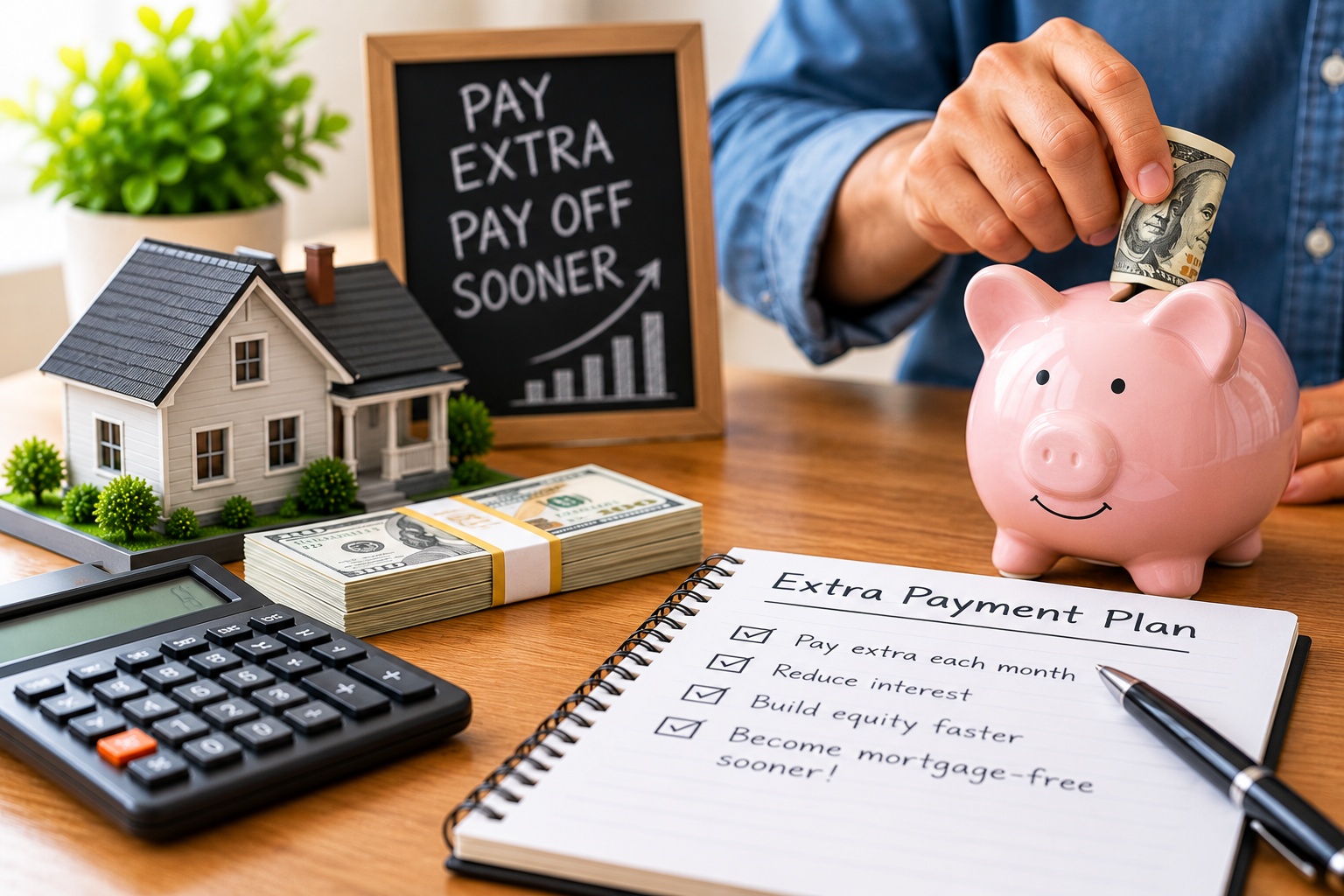
When you make your regular monthly mortgage payment, it is split into two parts: principal and interest. The interest is calculated based on your remaining loan balance. If you send an extra $100 with your payment, you must specify to your lender that the extra money should go toward the principal balance. If you do not specify this, the lender may simply apply it to next month's payment or hold it in an unapplied funds account, which does absolutely nothing to reduce your interest.
When you reduce the principal balance, the lender recalculates the interest for the following month based on the new, lower balance. Because your fixed monthly payment remains the same, more of that payment now goes toward the principal. This creates a compounding effect. Every extra dollar you put in saves you interest not just for that month, but for every month for the rest of the loan term.
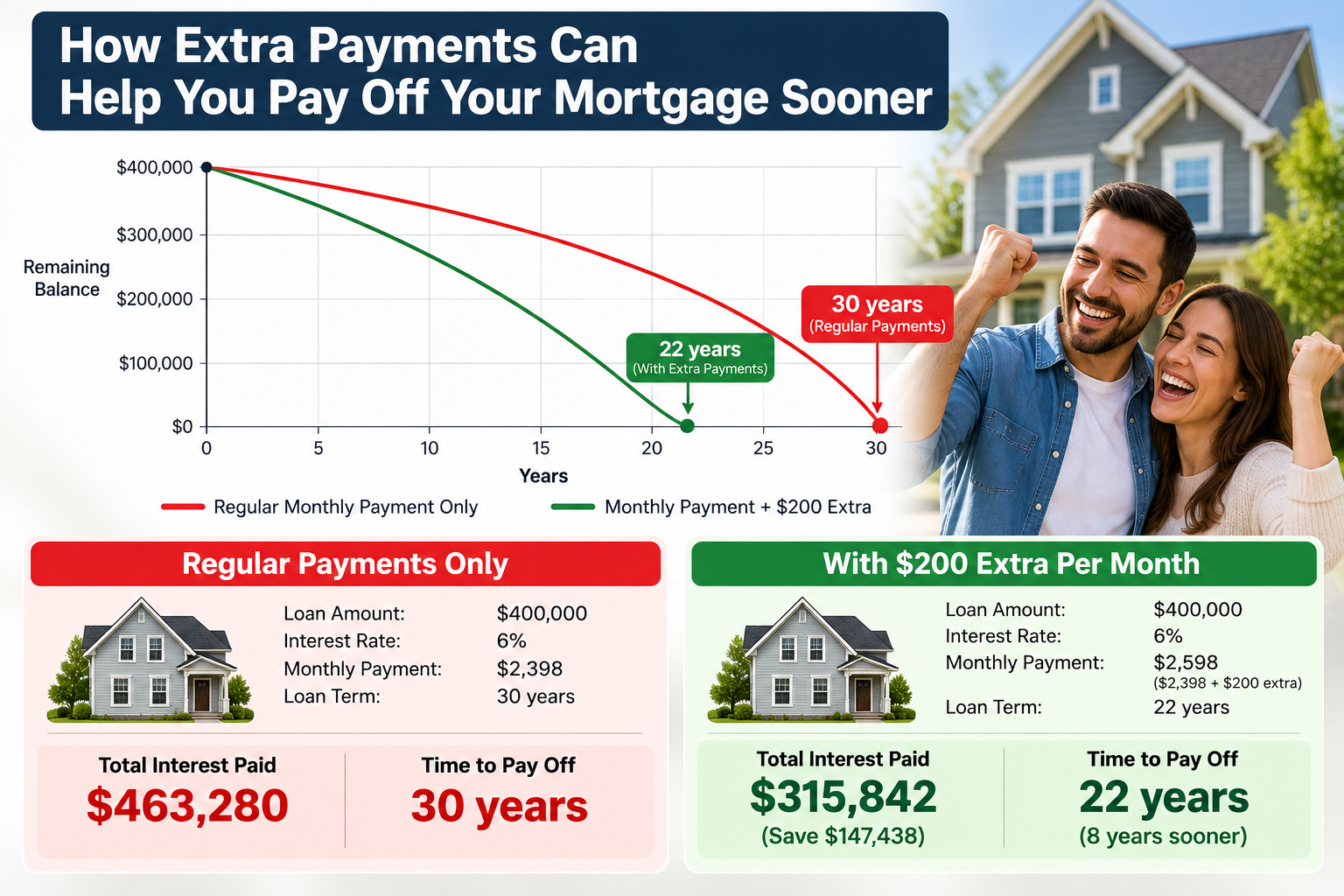
Let's look at the math. Imagine you have a $300,000, 30-year fixed mortgage at a 6.5% interest rate. Your monthly Principal & Interest payment is about $1,896.
If you make the standard payment for 30 years, you will pay approximately $382,633 in total interest. You will have paid more in interest than the original cost of the house.
Now, imagine you decide to pay an extra $200 a month toward the principal from day one. You will pay off the loan in about 24 years instead of 30. You will also save roughly $110,000 in interest. That is a massive return on investment for a relatively small monthly sacrifice. If you increase your extra payment to $400, you will pay off the loan in under 20 years and save over $180,000.
There is no wrong way to pay extra, but here are the most common strategies:
Simply add a fixed amount (like $50, $100, or $200) to your monthly payment. This is the easiest and most consistent method.
Use your annual tax refund or work bonus to make a large one-time payment toward the principal. Even one large payment early in the loan can save you tens of thousands in interest.
Instead of paying once a month, you pay half your mortgage payment every two weeks. Because there are 52 weeks in a year, you end up making 26 half-payments, which equals 13 full payments. This means you make one extra full payment every year automatically. Read more about bi-weekly payments.
You might feel like your budget is already stretched. However, many homeowners find extra cash by cutting unnecessary subscriptions, dining out less, or redirecting a car payment to the mortgage once the car is paid off. Use our amortization calculator to see exactly how much a small extra payment (like $50 or $100) can save you. Seeing the numbers in black and white is often the motivation people need to start.
Even redirecting $50 a month from dining out to your mortgage can shave years off your loan. The key is consistency. Once you see the balance drop, it becomes addictive.
This is a common financial debate. Paying extra on a mortgage offers a guaranteed "return" equal to your interest rate. If your mortgage rate is 6.5%, paying it down early is the equivalent of earning a guaranteed 6.5% on your money. In a volatile stock market, a guaranteed 6.5% return is very attractive.
However, you should only make extra payments if you already have a fully funded emergency savings account (3 to 6 months of expenses) and no high-interest credit card debt. If you have credit card debt at 22% APR, pay that off first before putting extra money into your low-interest mortgage. The math always favors paying off the highest interest rate first.
Before you start making extra payments, check your mortgage contract for a "prepayment penalty." While these are rare on standard conventional loans, some lenders (especially in the past) included clauses that charged a fee if you paid off the loan too early. If your loan has a prepayment penalty, it may wipe out the savings from your extra payments. Always check with your lender first.
If you have an FHA or VA loan, you generally do not have to worry about prepayment penalties. They are most common on subprime or specialized loans.
Paying off your mortgage early is one of the best ways to achieve true financial freedom and reduce stress. Even a modest extra payment each month can shave years off your loan. Contact your lender today to find out how to set up automatic extra principal payments, and make sure you specify that the extra money goes to the principal, not to next month's bill.