When choosing a mortgage, you must decide between a Fixed-Rate Mortgage and an Adjustable-Rate Mortgage (ARM). Both have distinct advantages, and the right choice depends on how long you plan to stay in the home and your tolerance for financial risk. Choosing the wrong type of loan could cost you thousands of dollars or put your home at risk if rates rise unexpectedly.
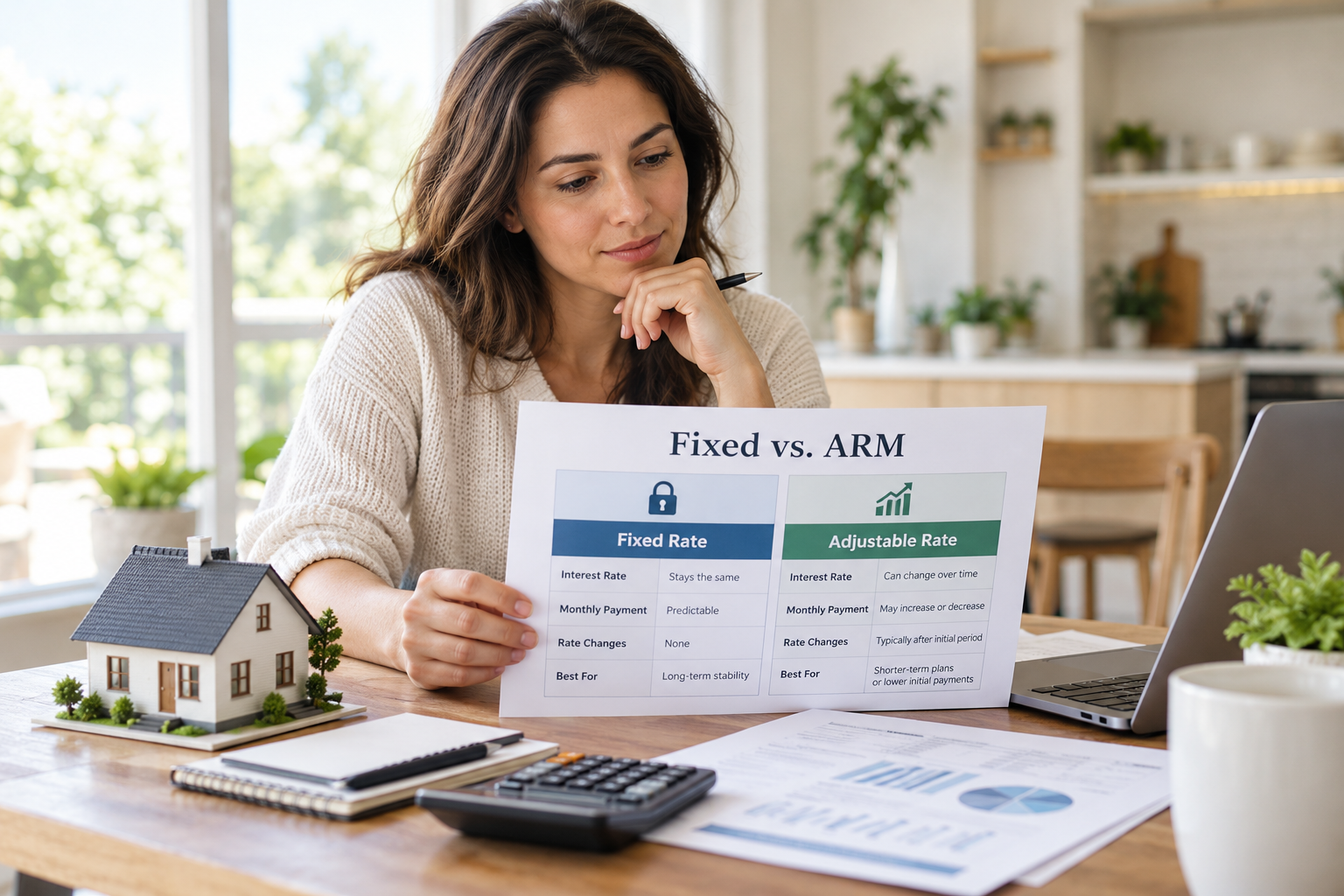
With a fixed-rate mortgage, your interest rate stays the same for the entire life of the loan. Your monthly principal and interest payment will never change. This is the most popular option in the US because it offers predictability and protection against rising interest rates. If inflation goes up, your mortgage payment does not.
Fixed-rate mortgages are typically offered in 30-year and 15-year terms. They are ideal for buyers who plan to stay in their home for a long time and want the peace of mind of a consistent monthly payment.
An ARM starts with a lower interest rate for a specific introductory period (usually 3, 5, 7, or 10 years). After that period ends, the rate adjusts based on market indexes—meaning your monthly payment can go up or down.
For example, a "5/1 ARM" has a fixed rate for 5 years, and then adjusts every 1 year after that. ARMs are riskier because if interest rates skyrocket, your monthly payment could become unaffordable. However, they often have "caps" that limit how much the rate can increase at one time or over the life of the loan.
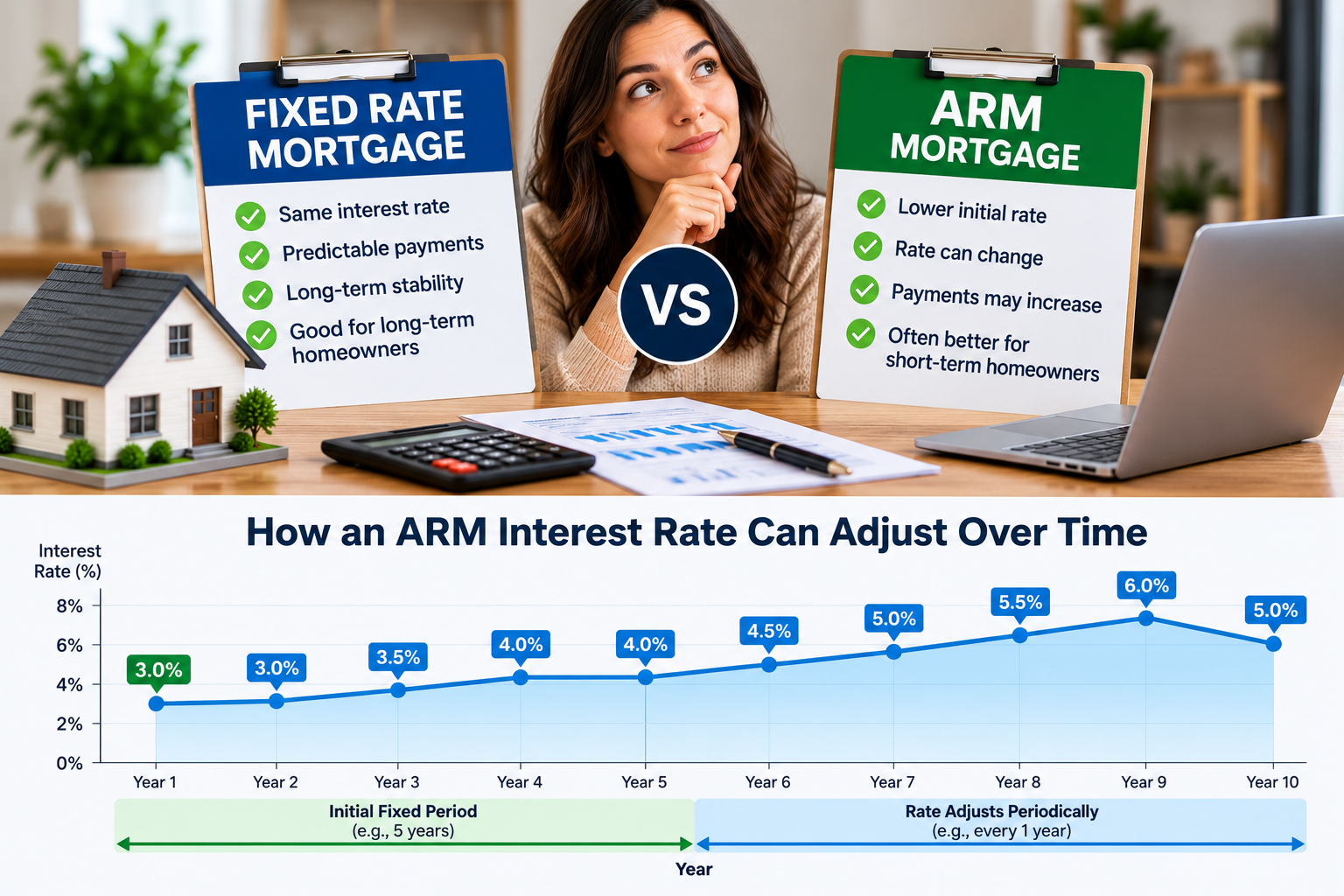
To protect borrowers from unlimited rate increases, ARMs come with caps. There are three types of caps you need to understand:
For example, if you have a 5/1 ARM with a 2/2/5 cap structure, your rate can go up by a maximum of 2% at the first adjustment, 2% at each subsequent adjustment, and a maximum of 5% over the life of the loan.
The two most common ARM structures are the 5/1 and the 7/1. The first number refers to the number of years the rate is fixed. The second number refers to how often the rate adjusts after that.
A 5/1 ARM is great for buyers who plan to sell or refinance within 5 years. A 7/1 ARM offers a slightly higher fixed rate but gives you two more years of predictability.
ARMs are ideal for buyers who plan to sell the home or refinance before the introductory fixed-rate period ends. If you only plan to live in a house for 5 years, a 7-year ARM allows you to enjoy a lower interest rate without ever experiencing the adjustment period.
They can also be a good option for high-income buyers who expect their income to rise significantly in the future, or for those who are buying in a high-interest-rate environment and expect rates to drop soon (allowing them to refinance before the ARM adjusts).
The primary risk of an ARM is payment shock. If interest rates rise significantly during the adjustment period, your monthly payment could jump dramatically. If you are on a tight budget, this could put your home at risk of foreclosure. It is essential to calculate the "worst-case scenario" payment (the highest possible payment based on the lifetime cap) to ensure you can still afford the home if rates rise.
Use our mortgage calculator to compare the monthly payments of a fixed-rate loan versus an ARM to see which fits your budget best.